Restaurant Kitchen Cleaning in Frontenac
Remove accumulated grease, food residue and overhead dust with a cleaning plan built around your kitchen, equipment and operating schedule.
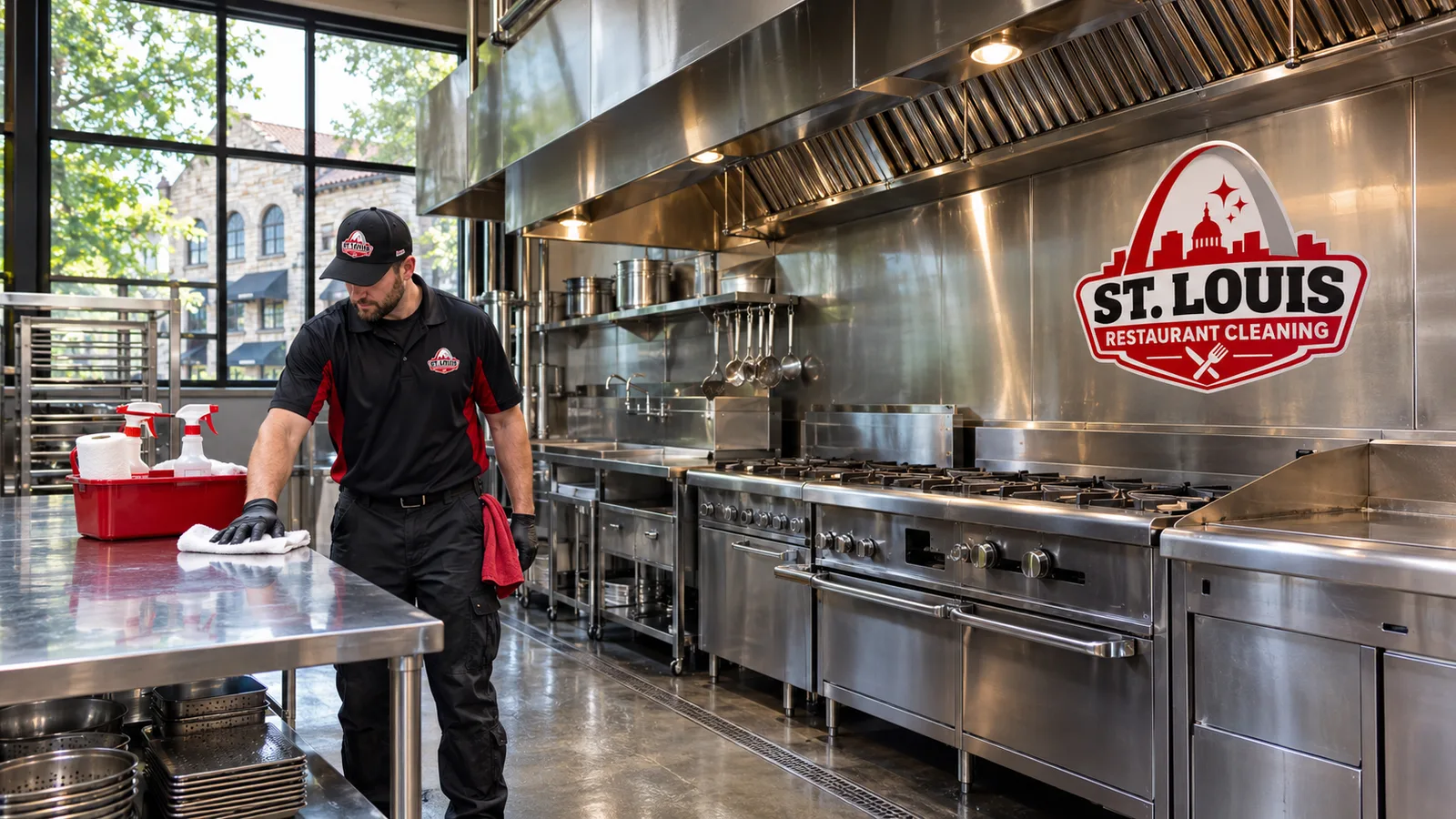
Detailed Cleaning for Working Commercial Kitchens
Restaurant Kitchen Cleaning Frontenac should address the places where everyday wiping and mopping stop: equipment sides, wall junctions, shelving, floor edges, casters, pipes and accessible overhead surfaces. Grease films attract dust and become harder to remove when they remain through repeated service cycles. A planned deep clean breaks down that buildup while respecting stainless steel, sealed floors and other commercial finishes.
St. Louis Restaurant Cleaning begins by discussing kitchen hours, access, priority areas and equipment limitations. Our team of St. Louis' restaurant specialists organizes the work around the way the kitchen operates rather than applying the same checklist to every property. Frontenac restaurants along busy commercial corridors may need work completed after closing or during a scheduled shutdown so cleaned areas have time to dry before food preparation resumes.
This work supports routine sanitation, but it does not replace staff food-safety procedures, pest control or professional exhaust-system service. The goal is a clearly defined cleaning scope for accessible kitchen surfaces and high areas, with exclusions discussed before work begins.
Request a CallbackWhat Restaurant Kitchen Cleaning in Frontenac Can Cover
The cleaning scope is based on site conditions. Common work includes degreasing accessible exterior surfaces on cook-line equipment, cleaning stainless steel tables and shelving, washing splash areas, detailing wall and floor edges, scrubbing sealed floors, and removing residue around equipment legs and casters. Doors, handles, kick plates and other frequent-touch points can also be included.
Preparation matters. Food, utensils, small appliances and open ingredients should be removed or protected before cleaning starts. Equipment is handled according to the agreed scope; cleaners should not disconnect gas, electrical or plumbing connections unless qualified and specifically authorized to do so. Heavy units may remain in place when safe access is unavailable.
Products and tools must fit the surface. Alkaline degreasers can help loosen grease on compatible materials, while abrasive pads may scratch polished stainless steel or damage coated finishes. Chemical labels, required dwell time and Safety Data Sheets guide proper use. Cleaning solutions should never be mixed, and food-contact surfaces require the appropriate rinse or sanitizing step before reuse.
Request a Callback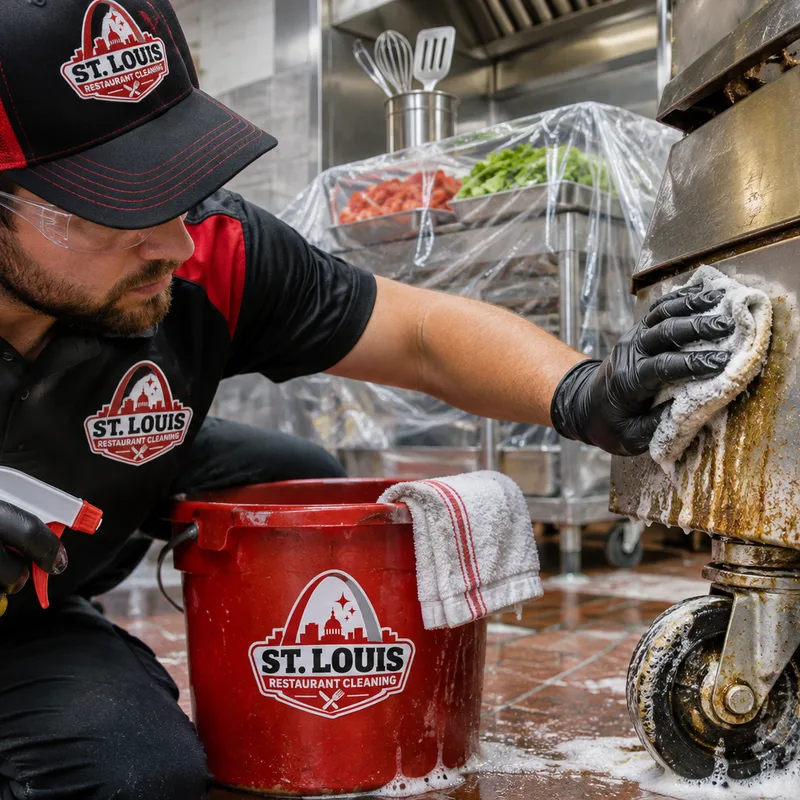
Cook-Line Exteriors
Accessible fronts, sides, knobs, ledges and lower equipment areas are degreased without disturbing utility connections.
Prep and Storage Surfaces
Stainless steel tables, shelving exteriors and compatible splash surfaces are cleaned using methods suited to their finish.
Floors and Edges
Sealed flooring, corners, base areas and reachable spaces around equipment receive focused scrubbing to remove stuck residue.
Doors and Touchpoints
Handles, push plates, cooler exteriors and other frequently handled surfaces can be incorporated into the written scope.
Accessible High Areas
Ceiling vents, pipes, ledges and structural surfaces are dusted or wiped when they can be reached and cleaned safely.
Scheduled Deep Cleaning
Recurring work can concentrate on rotating detail areas that routine closing duties do not fully address.
Restaurant High Dusting in Frontenac
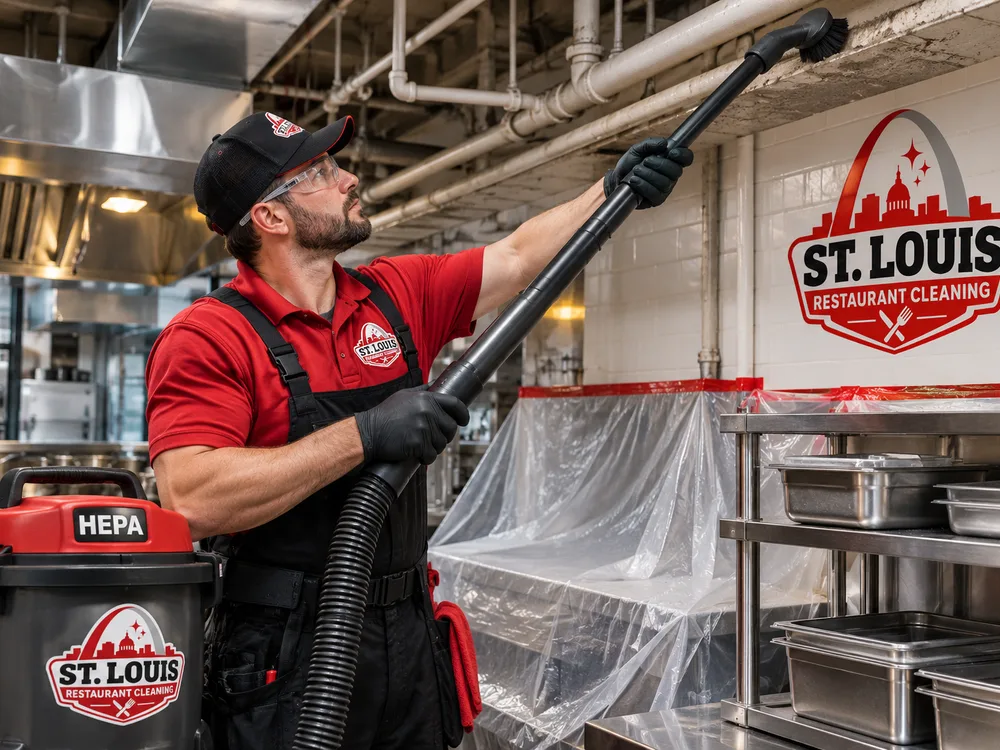
Restaurant High Dusting Frontenac targets buildup on accessible overhead pipes, vents, ledges, ceiling fans, light exteriors and exposed structural surfaces. Dust in these areas can collect grease aerosols, which makes it tacky and difficult to remove with dry dusting alone. The correct method may involve HEPA-filtered vacuuming, microfiber tools or controlled damp wiping with a compatible degreaser.
High work requires planning. The crew must identify safe access, protect prep surfaces and equipment beneath the work area, and keep loosened debris from spreading through the kitchen. Ladders or other access equipment need stable placement away from hot appliances and active traffic. Lights, fans and nearby equipment should be cool and safely isolated when the task requires it.
High dusting does not include cleaning inside grease ducts, exhaust fans or hood plenums unless that specialized work is explicitly contracted and performed under the applicable requirements. Those systems have separate access, fire-safety and documentation needs. Defining that boundary protects the restaurant from assuming an overhead wipe-down is the same as complete exhaust-system cleaning.
Request a CallbackWalk Through the Kitchen
We review the cook line, prep areas, floors, storage zones and high surfaces. Access restrictions, delicate finishes and areas outside the requested scope are identified before scheduling.
Set the Scope and Timing
The written plan lists the areas to be cleaned, expected preparation, access needs and the work window. Frontenac operators can schedule around closing hours, delivery periods and planned maintenance.
Protect and Prepare
Food and movable utensils are cleared or covered, signs are placed where needed, and cleaning tools are staged to limit interference with other work.
Degrease and Detail
The crew works through the agreed areas using surface-appropriate products, controlled dwell time and mechanical agitation where buildup requires it.
Review the Work
Cleaned areas are checked against the agreed scope. Any surface that could not be accessed safely is identified so the operator knows what was and was not completed.
Planning Around Frontenac Restaurant Operations
Frontenac sits along major commercial routes including Lindbergh Boulevard and Interstate 64, where restaurants may serve daytime shoppers, commuters and evening guests. Cleaning access should account for those operating patterns. A late close, early delivery or shared loading area can affect when crews stage equipment and how long floors have to dry.
Missouri weather also affects scheduling. Winter moisture and deicing residue can be tracked through receiving doors and service entrances, while humid summer conditions may lengthen drying time in poorly ventilated areas. A cleaning plan should leave safe walking surfaces and allow adequate drying before employees return to the kitchen.
The age and layout of a kitchen matter more than the dining-room appearance. Tight equipment spacing, low overhead utilities, open ceilings and limited floor drains can change the tools and time required. A walkthrough allows those conditions to be documented before the work window is reserved.
Request a CallbackA Written Scope
Confirm which equipment surfaces, floors, walls and high areas are included, along with anything specifically excluded.
Safe Product Use
Ask how products are selected for stainless steel, tile, grout, sealed floors and food-contact surfaces, and whether Safety Data Sheets are available.
Access Responsibilities
Establish who moves small items, unlocks the building, disables alarms and handles equipment that requires a qualified technician.
Drying and Reopening
Build enough time into the schedule for rinsing, drying, inspection and any required food-contact sanitizing before preparation resumes.
A walkthrough turns a general cleaning request into a clear scope based on your equipment, buildup, overhead access and available work window.
Call for a Free QuoteQuestions About Restaurant Kitchen Cleaning in Frontenac
How much does restaurant kitchen cleaning cost in Frontenac?
The price depends on kitchen size, grease level, equipment density, high-access needs and the number of labor hours required. A lightly soiled prep kitchen generally requires less work than a cook line with old buildup on floors, walls and equipment sides. After-hours access, restricted parking or the need for specialized access equipment may also affect the quote. A walkthrough is the soundest way to establish a written scope and price.
Can cleaning be scheduled after the restaurant closes?
Yes, restaurant kitchen cleaning can usually be planned outside operating hours when building access and the required work window are available. The schedule should allow time for preparation, cleaning, rinsing and floor drying before employees return. Frontenac restaurants should also account for early deliveries, alarm procedures and access to shared service areas.
How long does a commercial kitchen deep cleaning take?
The work may take several hours or require more than one visit, depending on kitchen size, buildup and the agreed scope. High dusting, tightly spaced equipment and detailed floor-edge work add time. A walkthrough allows the crew to estimate labor needs and decide whether the work fits into one shutdown period.
Does Restaurant High Dusting Frontenac include hood and duct cleaning?
No, cleaning accessible overhead surfaces is different from cleaning inside a commercial kitchen exhaust system. High dusting may cover reachable pipes, ledges, light exteriors and vents, while hood plenums, grease ducts and exhaust fans require a separately defined specialized service. The written scope should state that distinction plainly.
Do we need to remove food and small equipment first?
Yes, open food, utensils and portable items should generally be removed or securely protected before deep cleaning begins. This gives the crew safe access and reduces the chance of contamination. The pre-service plan should assign responsibility for clearing prep tables, shelves and floor areas.
Can you clean behind cooking equipment?
Behind-equipment cleaning is possible when the units can be accessed without unsafe movement or unauthorized disconnection of utilities. Gas lines, electrical connections, suppression components and plumbing can limit movement. If a qualified technician must disconnect or reposition equipment, that work should be coordinated before the cleaning visit.
How often should a Frontenac restaurant schedule deep cleaning?
The right interval depends on cooking volume, menu, grease production, ventilation and staff cleaning routines. A high-output fryer line may need detail work more often than a low-grease prep operation. Inspection findings and visible buildup provide a better basis for scheduling than a single fixed interval for every restaurant.
Plan a Cleaner Kitchen Around Your Operating Hours
Tell St. Louis Restaurant Cleaning about the kitchen layout, problem areas and preferred work window. We will help define the surfaces, high areas and access needs that belong in the cleaning scope.