Kitchen Deep Cleaning in St. Louis
Detailed cleaning for restaurant kitchens, walk-in coolers and hard-to-reach areas, planned around your operating hours and documented in a clear scope.
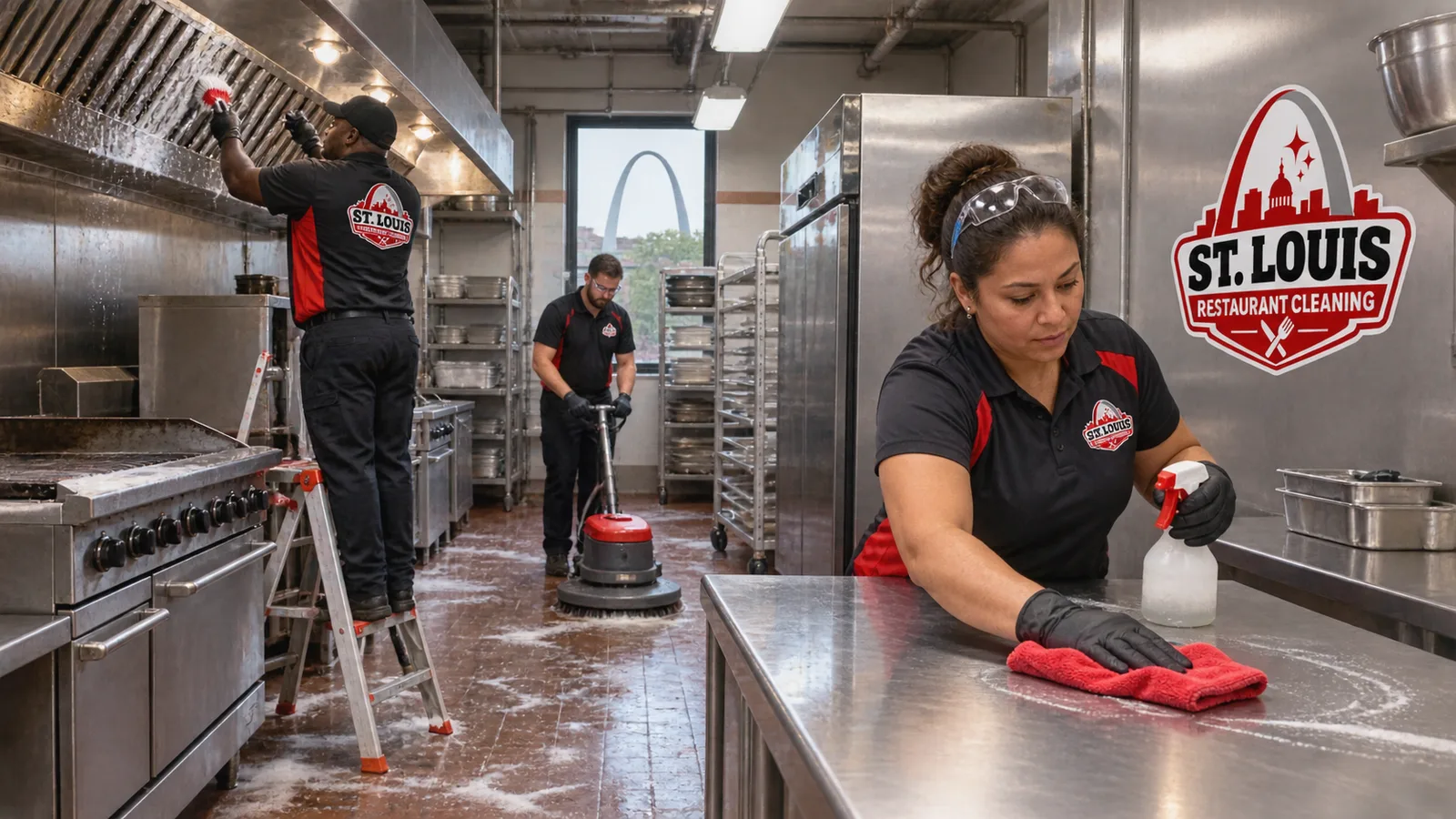
Detailed Cleaning for Working Restaurant Kitchens
Kitchen Deep Cleaning addresses the buildup that routine closing work may leave behind: grease on equipment sides, residue under movable units, soil along wall and floor edges, dust on elevated surfaces and debris in walk-in cooler corners. St. Louis Restaurant Cleaning develops the scope around the kitchen's layout, current condition and access restrictions rather than applying the same checklist to every facility.
Our work can support independent restaurants, bars, cafés, commissaries and other food-service operations. Older commercial buildings in Soulard and the Central West End may have tight equipment spacing, high ceilings or limited loading access. Downtown kitchens often require careful scheduling around shared docks and building rules. Restaurants in The Hill commonly work within compact, heavily used kitchens where cleaning must proceed in a controlled sequence. Each condition affects labor, equipment and timing.
During kitchen deep cleaning, a professional restaurant company in St. Louis coordinates the work with a designated manager, identifies exclusions before service and focuses on areas that can be cleaned safely without interfering with protected food, chemicals or operating equipment. Our office at 1055 S Jefferson Ave, Suite 5 provides a central base for serving commercial kitchens across the city.
Request a CallbackCooking-Line Detail Work
Degreasing accessible equipment exteriors, backsplashes, walls, ledges and floor edges around the line. Equipment is moved only when the scope, utility connections and manufacturer requirements permit it.
Floors, Corners and Edges
Agitation and cleaning target soil around legs, casters, curbs, thresholds and other places that ordinary mopping can miss. The method is selected for the flooring and the amount of grease present.
Prep and Storage Areas
Accessible shelving, non-food-contact exteriors, storage racks and surrounding surfaces can be cleaned after food and loose supplies have been removed or protected by restaurant staff.
Walk-In Cooler Cleaning
The scope may include accessible walls, shelving, door gaskets, thresholds and floors. Food handling, temperature control and removal of expired inventory remain coordinated with restaurant management.
High Dusting
High dusting in St. Louis restaurants can address exposed pipes, beams, vents, ledges and ceiling-level fixtures where access is safe. Ladders or extension tools are selected after the area is assessed.
Dish and Utility Areas
Detail work can cover splash zones, accessible machine exteriors, wall surfaces, floor edges and drains where included. Drain interiors and plumbing repairs require separate qualified service.
Walk-In Cooler Cleaning Requires Careful Preparation
A walk-in cooler should be prepared before cleaning starts. Restaurant staff typically sort inventory, discard items under their own food-safety procedures and move remaining products into protected cold storage. Cleaning crews should not make decisions about food disposition or allow products to sit outside required temperature controls.
Once access is clear, restaurant deep cleaners can remove loose debris and clean approved surfaces such as shelving, walls, floors, thresholds and door components. Products and tools must be suitable for the surface, and food-contact areas require the correct cleaning and sanitizing sequence. Sanitizing is not a substitute for removing grease, soil or organic residue first.
Cooler cleaning also provides a useful opportunity to note visible maintenance concerns such as damaged gaskets, loose shelving or deteriorated floor surfaces. Cleaning does not correct refrigeration, electrical, mold, pest or structural problems. Those findings should be referred to the appropriate contractor or restaurant manager.
Request a Callback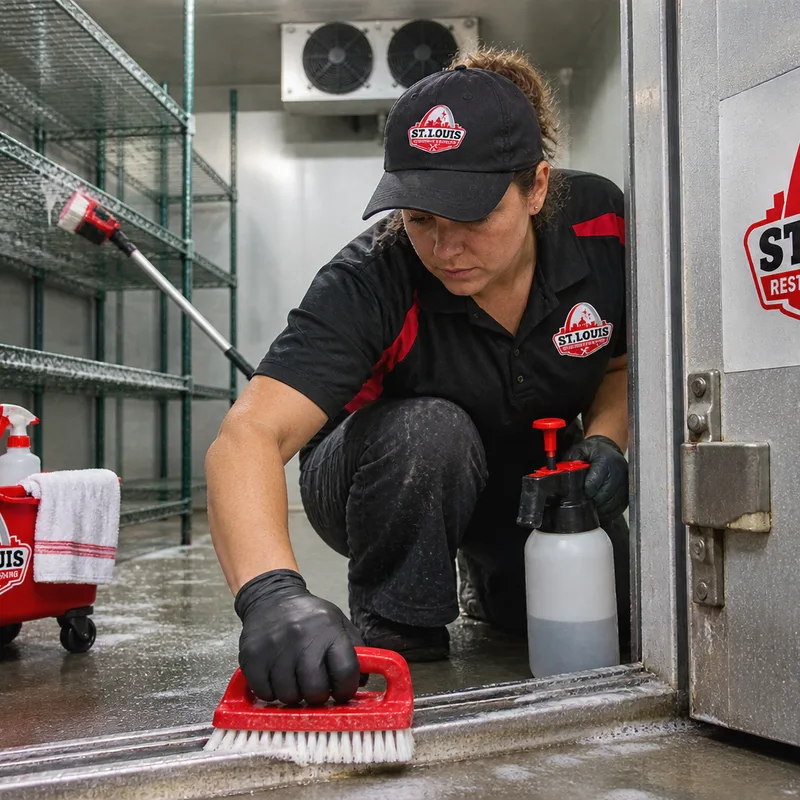
Site Walk and Priorities
We review the cooking line, prep area, storage, walk-ins, utility spaces and high surfaces with your manager. Access limitations, delicate finishes and areas outside the requested scope are recorded.
Written Scope and Scheduling
The plan identifies target surfaces, preparation responsibilities and expected service window. Work may be scheduled after closing, during a planned shutdown or in controlled phases when the kitchen layout permits.
Kitchen Preparation
Restaurant staff secure food, smallwares, knives, chemicals and sensitive equipment. Utilities are disconnected only by authorized personnel when required, and fixed appliances remain in place unless movement has been approved.
Dry Removal and Degreasing
Crews remove loose debris before applying appropriate cleaning chemistry. Greasy surfaces may require dwell time and agitation, followed by controlled rinsing or wiping that limits overspray near electrical components.
Detailed Cleaning by Zone
Work proceeds through the agreed zones using separated tools where appropriate. Floors are generally completed after elevated surfaces so loosened dust and residue can be collected at the end.
Review and Handover
A designated contact reviews the completed scope, discusses inaccessible or excluded areas and receives notes about visible maintenance concerns. The restaurant then handles equipment startup and food-area readiness under its operating procedures.
Commercial Kitchen Deep Cleaning for St. Louis Conditions
Local restaurant layouts vary sharply. A compact kitchen in Soulard may require equipment to be cleaned in stages because there is little room to reposition carts. A Central West End operation in a mixed-use building may need quiet overnight work and protected routes through shared spaces. Downtown facilities may have freight-elevator reservations or restricted loading periods. In The Hill, established dining rooms can have busy production schedules that make a planned closure or overnight service more practical than daytime work.
St. Louis weather also affects the plan. During humid summers, exterior doors should not be left open unnecessarily while interiors are being cleaned. Winter moisture and tracked-in deicer can add soil around receiving doors, thresholds and kitchen traffic lanes. These conditions make containment, dry debris removal and floor care part of a sound restaurant detailed cleaning plan.
Restaurant management remains responsible for food-safety policies and regulatory compliance. Within the City of St. Louis, food establishments operate under requirements administered by the City of St. Louis Department of Health. A deep cleaning service can support sanitation routines, but it does not guarantee an inspection outcome or replace required daily cleaning, employee hygiene, pest control, hood-system service or equipment maintenance.
Request a CallbackWhat Kitchen Deep Cleaning Does and Does Not Include
A useful proposal distinguishes general kitchen detail work from regulated or specialized work. Cleaning accessible stainless steel, washable walls, floors, shelving and equipment exteriors may fit a standard scope. Internal hood ducts, rooftop exhaust fans, fire-suppression components, live electrical assemblies, refrigeration repairs, pest remediation, hazardous materials and significant mold conditions require qualified specialists.
Product selection matters. Degreasers need enough dwell time to loosen soil, but stronger chemistry is not automatically better. The cleaner must account for aluminum, painted surfaces, grout, rubber gaskets and other materials that may react differently. Safety data sheets, label directions and required personal protective equipment guide chemical use. Food-contact surfaces must be cleaned and, where required, sanitized with an approved product at its labeled concentration and contact time.
Restaurant Deep Cleaning in St. Louis should also be scoped separately from routine janitorial work. A one-time reset may focus on accumulated residue and neglected edges. Recurring detailed cleaning can rotate through zones so buildup is addressed before every area needs another intensive service.
Request a CallbackHow Much Does Kitchen Deep Cleaning Cost in St. Louis?
Kitchen deep cleaning in St. Louis typically ranges from $800 to $3,500, while large, heavily soiled kitchens or multi-zone projects may cost more. A compact kitchen with clear access is generally at the lower end; cooking lines, walk-ins and high surfaces add labor and equipment.
Final pricing depends on square footage, grease buildup, equipment spacing, cooler preparation, ceiling height, overnight scheduling and whether appliances can be moved safely. A site walk confirms the exact cost and written scope before service.
Request a CallbackA clear site walk helps define the priority zones, preparation requirements and service window before your restaurant commits to the work.
Call for a Free QuoteRestaurant Deep Cleaning Questions
How long does a restaurant kitchen deep clean take?
A compact, prepared kitchen may be completed in one overnight service, while a large or heavily soiled facility can require multiple shifts. Equipment density, high-dusting access, walk-in cooler preparation and the amount of grease all affect duration. Downtown loading restrictions or shared-building access can also shape the schedule.
Can cleaning be scheduled after the restaurant closes?
Yes, after-hours service can be planned when staffing, building access and the requested scope allow it. The manager should provide closing and reopening deadlines, alarm instructions, approved access routes and a responsible contact. Enough time must remain for surfaces to dry and for restaurant staff to complete their reopening checks.
Do we need to remove food before walk-in cooler cleaning?
Yes, food must be removed from the active work area or securely protected under the restaurant's food-safety procedures. Management controls inventory decisions and cold holding. Emptying shelves in planned zones gives the crew access while reducing the risk of contamination or temperature abuse.
Will the crew move ovens, fryers and refrigerators?
Equipment is moved only when the scope allows it and movement can be completed safely. Gas, electrical, water and refrigeration connections may require authorized technicians, so connected or fixed units usually remain in place unless disconnection has been arranged. Casters, floor condition and available clearance are reviewed during the site walk.
Is high dusting included with commercial kitchen deep cleaning?
High dusting can be included when ceiling height, access and surface condition are identified in the scope. Exposed pipes, beams, ledges and accessible vent exteriors are common targets. Work near active cooking equipment, open food or fragile ceiling materials requires preparation and may need a separate service period.
How should a restaurant prepare for detailed cleaning?
The restaurant should secure food, remove smallwares, identify sensitive equipment and provide clear access to the approved work zones. Staff should also empty designated cooler shelves, label items that must not be moved and arrange any required utility disconnections. Good preparation reduces delays and protects operating equipment.
Does professional restaurant deep cleaning replace daily sanitation?
No, deep cleaning supplements the restaurant's daily and scheduled sanitation program. Food-contact surfaces, utensils and active preparation areas still require cleaning and sanitizing at the frequencies set by the operation's procedures and applicable health requirements. Deep cleaning is intended for broader detail work and accumulated soil.
How often should a commercial kitchen receive a deep clean?
The right frequency depends on cooking volume, menu, equipment arrangement and the restaurant's routine cleaning program. Frying and heavy grease production may justify more frequent detail work than a light-preparation operation. A recurring plan can rotate cooking lines, walk-ins, storage areas and elevated surfaces based on observed buildup.
Plan a Cleaner, More Workable Kitchen
Tell St. Louis Restaurant Cleaning about your kitchen layout, priority areas and operating schedule. We will define the preparation steps and provide a clear scope for the work.