Kitchen Cleaning Services
Detailed commercial cleaning planned around your restaurant's equipment, operating hours, and highest-use work areas.
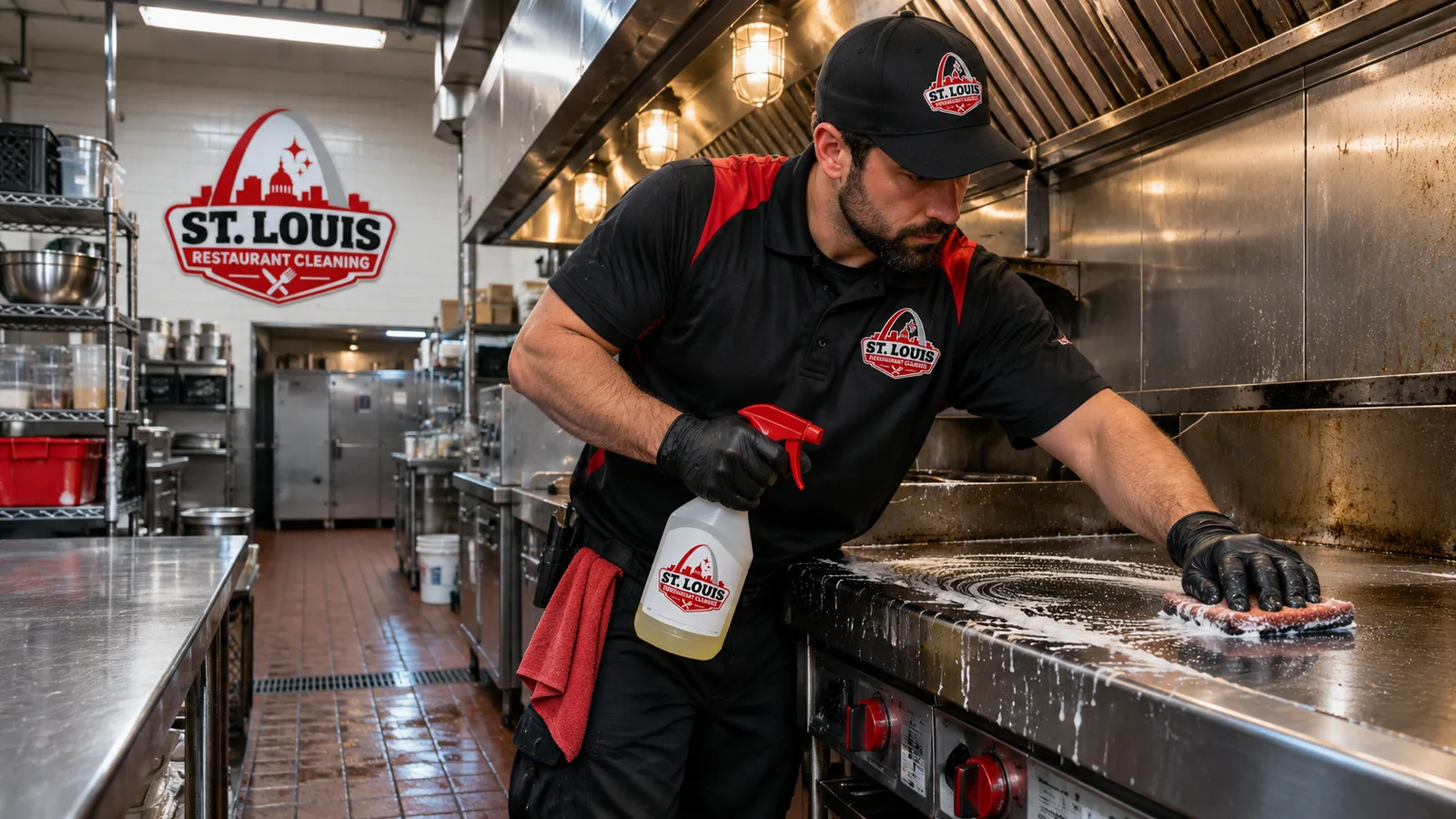
Commercial Kitchen Cleaning for St. Louis Restaurants
Kitchen Cleaning Services address the grease, carbon, food residue, and soil that build up in commercial food-preparation areas. St. Louis Restaurant Cleaning handles scheduled maintenance cleaning and one-time deep cleaning for restaurants, bars, cafés, commissaries, and other food-service operations.
A useful scope starts with the kitchen as it actually operates. Cooking volume, equipment layout, floor condition, access, and the time available between shifts all affect the plan. As St. Louis' trusted restaurant team, we coordinate the work around your operating schedule and identify which equipment must be cool, empty, or moved before cleaning begins.
Different restaurant districts create different access demands. The Central West End and The Grove have busy dining corridors where timing and loading access need careful planning. Downtown kitchens may have shared docks, elevators, or building access procedures. The Hill has many established restaurant spaces where compact layouts can make cleaning behind and beneath equipment more labor-intensive. In Soulard, older commercial buildings may also require close attention to narrow service areas and uneven or aging floor surfaces.
Request a CallbackCooking-Line Cleaning
We remove grease and cooked-on residue from accessible exterior surfaces on ranges, fryers, ovens, grills, salamanders, and other line equipment. Interior cleaning is included only when it is listed in the agreed scope and permitted by the equipment manufacturer.
Stainless Steel and Prep Areas
Worktables, counters, shelving, sinks, backsplashes, and accessible wall surfaces are cleaned with products and methods appropriate for the material and soil level.
Kitchen Equipment Cleaning
Cleaning can cover removable components, casters, equipment sides, accessible undersides, and the floor beneath movable units. Sensitive controls, pilot assemblies, wiring, and gas connections require equipment-specific precautions.
Floors, Edges, and Drains
Degreasing focuses on traffic lanes, corners, edges, grout lines, under-equipment areas, and accessible floor drains. The method is selected for quarry tile, sealed concrete, resinous flooring, or other installed surfaces.
Low-Reach Walls and Doors
Splash zones, baseboards, kick plates, door faces, handles, and pass-through areas can be added to the scope. These surfaces often collect grease film even when they appear clean at a glance.
Detail and Reset Work
Trash receptacle exteriors, shelving, mats, carts, and other washable kitchen items can be addressed when included. Cleaned components are returned only after surfaces are ready and safe to reassemble.
Restaurant Kitchen Cleaning Built Around Grease Control
Professional Kitchen Cleaning requires more than wiping visible stainless steel. Grease migrates through a cooking area as droplets and vapor, then settles on ledges, walls, equipment sides, casters, and floors. Heat can harden that film over time. Effective cleaning uses the correct dwell time, controlled agitation, and thorough recovery of loosened soil.
Our team works from cleaner areas toward heavier soil and generally from higher surfaces toward the floor. Dry debris is removed before wet work where appropriate. Food, utensils, single-service items, and exposed ingredients must be removed or protected. Equipment must be shut down and cooled according to the agreed preparation plan.
Chemical selection matters. Alkaline degreasers may be suitable for heavy grease on compatible surfaces, while stainless steel, aluminum, painted finishes, rubber, and sealed floors can require different products or dilution. Safety data sheets and manufacturer instructions guide handling. A degreaser should never be mixed with bleach or another incompatible chemical.
This work does not replace hood, duct, or fire-suppression system service. Those systems require specialized procedures and should be handled under their own maintenance scope.
Request a Callback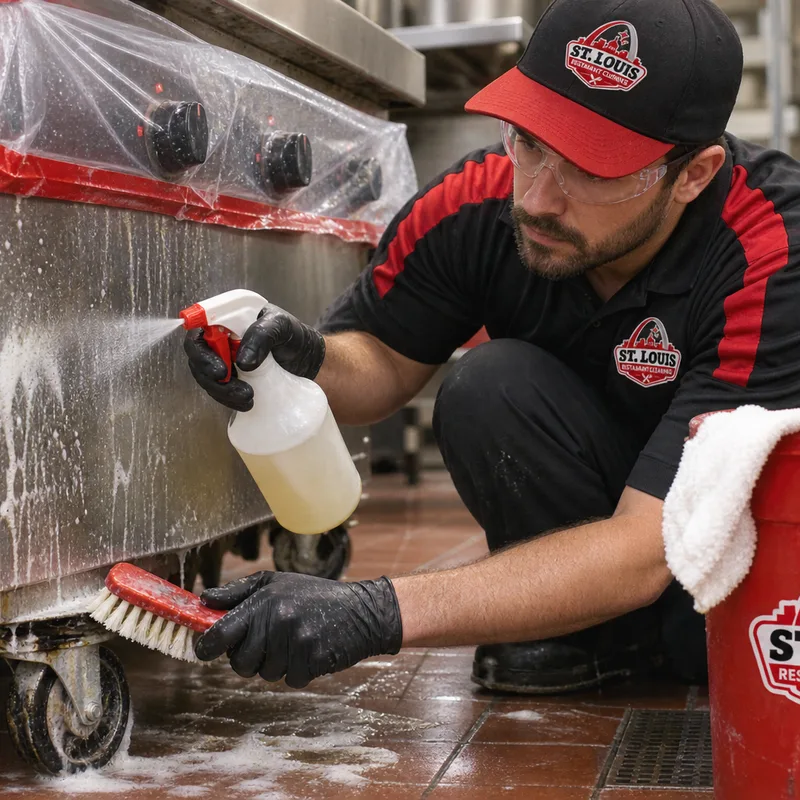
How Our Commercial Kitchen Deep Cleaning Process Works
Request a CallbackWalk Through the Kitchen
We review the cooking line, prep areas, floors, access limitations, soil level, and operating schedule. The walkthrough distinguishes routine cleaning from heavy restorative work and identifies equipment that may need special preparation.
Set a Written Scope
The plan identifies included surfaces, equipment interiors or exteriors, movable items, exclusions, and access responsibilities. It also sets expectations for shutdown, cooling, food removal, and water or electrical access.
Prepare and Protect
The work area is cleared as agreed. Sensitive components and adjacent food-contact items are protected, and wet-floor controls are placed before degreasing begins.
Degrease and Detail
Technicians apply compatible products, allow appropriate dwell time, agitate stubborn buildup, and recover residue. Removable parts are handled according to the equipment and approved scope.
Rinse, Dry, and Review
Applicable surfaces are rinsed or wiped to remove cleaner residue, then allowed to dry. The crew reviews the included work and notes any inaccessible areas, damaged finishes, or maintenance concerns observed during cleaning.
How Much Do Kitchen Cleaning Services Cost in St. Louis?
Commercial kitchen cleaning in St. Louis typically ranges from $500 to $1,500 for a smaller scheduled deep clean, while large kitchens or heavy grease restoration may run $1,500 to $5,000 or more. These are general planning ranges, not fixed quotes.
Final pricing depends on kitchen size, soil level, equipment quantity, interior versus exterior cleaning, access beneath the line, floor condition, required crew time, and overnight scheduling. The exact cost is confirmed after a walkthrough or detailed scope review.
Request a Callback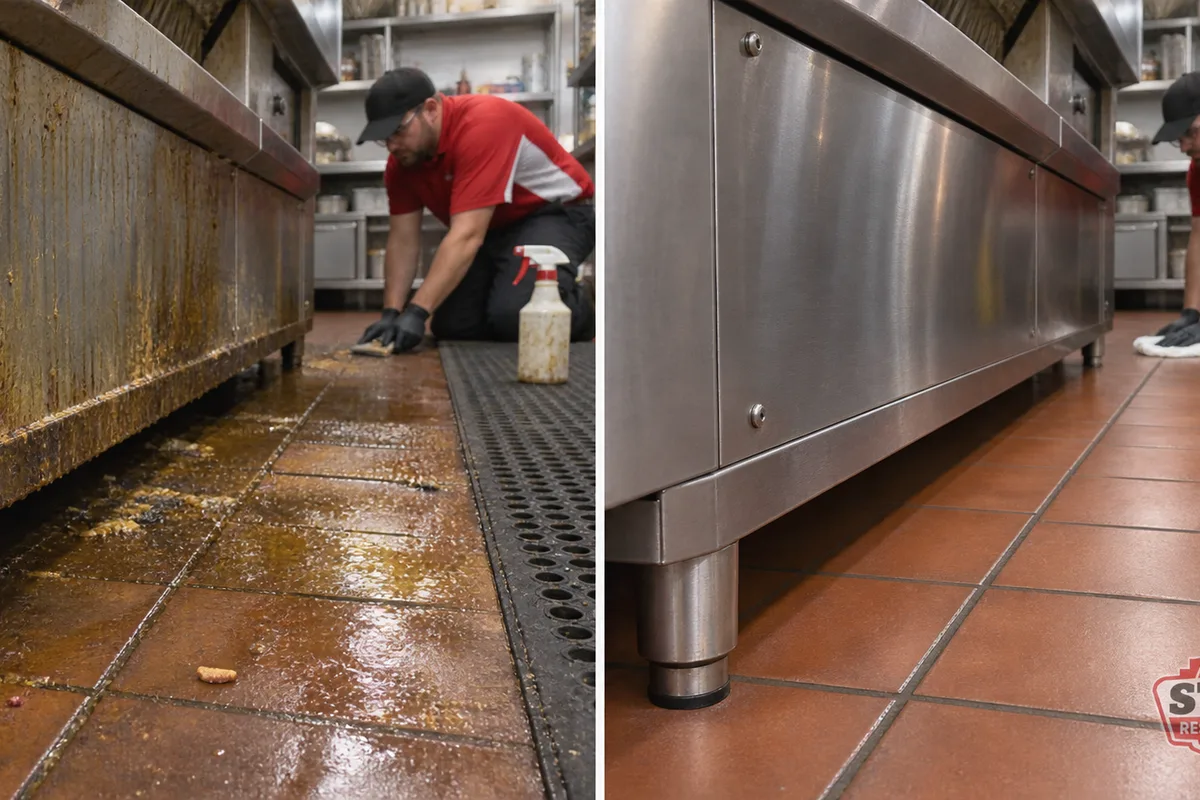
A Practical Cleaning Schedule for Your Kitchen
The right frequency depends on cooking volume and the type of soil produced. A high-output fryer line usually needs more frequent degreasing than a low-volume prep kitchen. Scheduled service can target the work that falls outside daily closing duties, such as equipment sides, caster areas, wall splash zones, shelving, grout lines, and spaces beneath movable units.
One-time Restaurant Kitchen Cleaning may make sense before opening a previously occupied space, after equipment changes, following deferred maintenance, or ahead of an operational review. Recurring service is better for controlling buildup before it hardens and spreads into difficult access points.
St. Louis weather also affects entry areas and kitchen floors. Winter moisture and deicing residue can be tracked into back-of-house spaces, while humid summer conditions can slow drying when ventilation is limited. Scheduling enough drying time before employees return helps reduce slip risks and prevents immediate resoiling.
A professional plan should complement the restaurant's daily sanitation procedures. Food-contact surfaces still require the establishment's approved wash, rinse, and sanitizing process after cleaning and before food preparation resumes.
Request a CallbackChoosing a Kitchen Cleaning Company
Ask for a written scope that states exactly what is included. Terms such as “deep clean” can mean different things, especially for oven interiors, fryers, refrigeration units, ceiling areas, drains, and spaces behind fixed equipment. A clear proposal should identify exclusions as well as included work.
Discuss access before scheduling. The contractor needs to know whether equipment can be moved, who is authorized to disconnect utilities, when hot appliances will be cool, and whether the building has loading or elevator restrictions. Downtown properties and mixed-use buildings can require advance coordination with property management.
Also ask how the crew selects chemicals, protects food-contact items, controls wet floors, and handles wastewater. The Metropolitan St. Louis Sewer District manages wastewater and stormwater systems in much of the region, so wash water, grease, and chemical residue should never be directed into a storm drain. Indoor recovery and disposal procedures should be established before work starts.
Finally, match the scope to the result you need. Routine professional cleaning controls ongoing soil. Heavy carbon deposits, damaged grout, failing floor coatings, corrosion, and inaccessible grease may require added labor or repair by another qualified trade.
Request a CallbackA walkthrough turns a broad cleaning request into a clear equipment list, preparation plan, and schedule that fits your operating hours.
Call for a Free QuoteQuestions About Restaurant Kitchen Cleaning in St. Louis
How long does commercial kitchen deep cleaning take?
A smaller kitchen may be completed during one after-hours shift, while a large facility or heavy restoration can require multiple shifts. Equipment count, grease level, access, and drying time determine the schedule. Kitchens with shared docks or elevators in Downtown St. Louis may also need added setup and load-out time.
Can your crew clean while our restaurant is open?
Some isolated areas may be cleaned during off-peak hours, but intensive degreasing is usually best scheduled when food production has stopped. Hot equipment must cool, exposed food must be removed or protected, and wet-floor controls need adequate space. The schedule is planned around your service hours and reopening time.
Do you clean inside ovens, fryers, and refrigerators?
Interior equipment cleaning can be included when the exact units and procedures are listed in the scope. Each appliance has different shutdown, cooling, disassembly, electrical, and manufacturer requirements. Fryer boil-outs, refrigeration coil service, and appliance repair are separate tasks unless specifically agreed.
What should we do before the restaurant kitchen cleaners arrive?
Complete the preparation list supplied with the scope, which may include removing food and utensils, emptying selected equipment, cooling appliances, and clearing access routes. The restaurant should also identify equipment that cannot be moved and arrange any required building access, especially where a shared loading area is used.
Are food-contact surfaces sanitized after cleaning?
Cleaning and sanitizing are separate steps, so the agreed scope must state whether sanitizing is included. Cleaning removes grease and soil first. Before food preparation resumes, food-contact surfaces must receive the establishment's approved wash, rinse, and sanitizing procedure using products labeled for that purpose.
How often should a commercial kitchen receive professional deep cleaning?
Frequency should be based on cooking volume, menu, grease production, equipment layout, and the strength of daily closing routines. High-volume frying and grilling areas usually need attention more often than light-prep operations. A walkthrough can identify weekly, monthly, quarterly, or condition-based tasks without applying one schedule to every surface.
Does kitchen cleaning include the exhaust hood and ductwork?
Standard kitchen cleaning does not include exhaust duct interiors, rooftop fans, or fire-suppression components unless specialist hood service is explicitly contracted. Accessible exterior hood surfaces may be included. Exhaust systems should follow the inspection and cleaning schedule appropriate to the cooking operation and applicable fire-safety requirements.
What affects the price of Commercial Kitchen Cleaning in St. Louis?
Kitchen size, equipment count, grease thickness, surface condition, access, crew hours, and the requested cleaning detail drive the price. Tight established kitchens in The Hill may take longer when equipment has limited clearance. A walkthrough provides the information needed for an accurate written scope.
Plan a Cleaner Commercial Kitchen
Tell St. Louis Restaurant Cleaning about your equipment, operating hours, and problem areas. We will help define the scope and preparation needed before work is scheduled.