Commercial Kitchen Floor Cleaning
Remove built-up grease, embedded soil and dark grout residue with professional cleaning planned around your restaurant's operating hours.
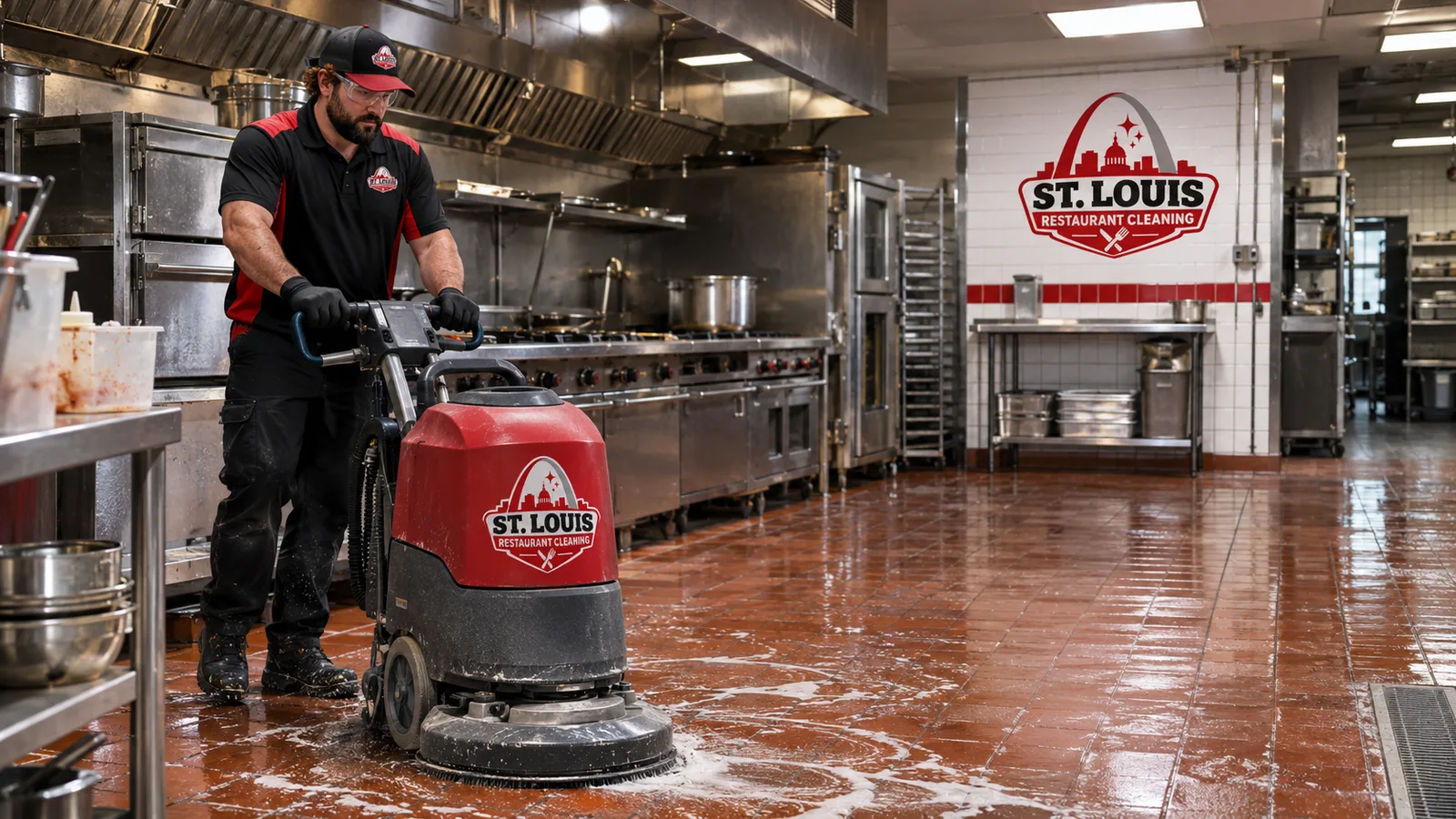
A Cleaner Floor Without Disrupting Service
Commercial Kitchen Floor Cleaning requires more than a quick mop at closing. Cooking oil, tracked-in soil and food residue collect in grout lines, around equipment and along wall edges. Repeated mopping can spread that film across the floor, especially when the cleaning solution is overloaded or the water is not changed often enough. Professional cleaning breaks down the buildup and extracts the suspended soil instead of leaving it to dry on the surface.
St. Louis Restaurant Cleaning provides restaurant floor cleaning services for busy kitchens and food-service areas. Our restaurant specialists serving St. Louis, MO plan the work around access, floor condition and the time needed for cleaned surfaces to dry before employees return. The scope can cover the cook line, prep areas, dishwashing zones, walk-in approaches, server stations and other tiled work areas.
Request a CallbackRestaurant Tile and Grout Need Different Treatment
Tile and grout do not soil in the same way. Glazed quarry tile and ceramic tile generally hold surface grease, while cement-based grout is porous and can retain oily residue below the surface. Low spots, worn grout joints and textured slip-resistant tile also trap debris that ordinary flat mops may miss.
Restaurant tile cleaning starts with an inspection of the floor, grout, transitions and drains. The cleaning chemistry must match the soil and flooring material. An alkaline degreaser is commonly used on greasy food-service floors, but dilution and dwell time matter. Stronger is not automatically better. The solution needs enough contact time to loosen residue without drying on the floor, and mechanical agitation helps release contamination from texture and joints.
Restaurant grout cleaning focuses on embedded buildup without promising that cleaning will repair cracked, missing or permanently discolored grout. Damaged joints should be identified before work begins. The cleaning plan also accounts for stainless-steel fixtures, base transitions and nearby surfaces that may need protection from splash.
Request a Callback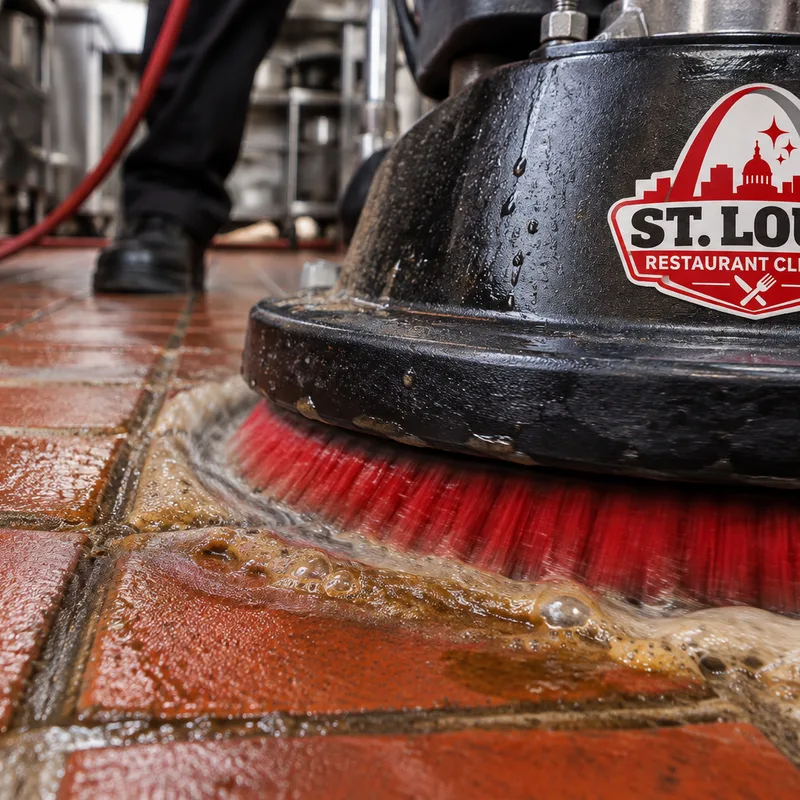
Kitchen Floor Degreasing
Targeted degreasing loosens cooking oil and greasy film around fryers, ranges, prep lines and other high-soil work zones. The process is selected for the flooring material and current condition.
Tile Surface Cleaning
Mechanical agitation works cleaning solution into textured tile, corners and traffic lanes where repeated mopping may leave dull residue.
Grout Line Cleaning
Focused agitation and soil recovery remove accumulated residue from sound grout joints. Existing cracks, failed grout and deep staining are documented rather than concealed.
Edge and Detail Work
Perimeters, cove-base transitions, equipment approaches and other difficult areas receive separate attention when they are included in the agreed scope.
Soil Extraction
Loosened grease and dirty solution are recovered so they are not simply redistributed across the kitchen floor.
Scheduled Maintenance
Recurring service can be planned around operating hours and the soil load produced by the kitchen, dining volume and floor layout.
Inspect the floor and access
We review tile type, grout condition, greasy zones, drains, transitions, equipment clearances and the route available for hoses or machinery. We also identify what staff must move before the appointment.
Set the cleaning scope
The plan defines which kitchen and service areas are included, how fixed equipment will be handled, when work can begin and how much drying time should be allowed.
Remove loose debris
Dry food particles and loose soil are collected before wet cleaning. This keeps debris from turning into slurry during degreasing.
Apply cleaner and allow dwell time
A suitable cleaning solution is applied at the proper dilution. It remains on the surface long enough to break the bond between oily soil, tile and grout without being allowed to dry.
Agitate and recover the soil
Commercial equipment and detail tools scrub the floor, grout and accessible edges. The released residue and spent solution are then extracted or recovered.
Rinse, review and dry
Residual cleaner is removed as appropriate, and the completed work is reviewed. Staff should keep traffic off the floor until it is dry and ready for normal kitchen use.
Restaurant Floor Cleaning in St. Louis
Restaurant layouts across the St. Louis area create different access and scheduling needs. Central West End dining rooms may have compact back-of-house routes where equipment placement limits machine access. The Grove's late-night food and beverage businesses often need a narrow window between closing duties and the next shift. Soulard restaurants in older commercial buildings can have tight service entries, irregular transitions or floors that have been repaired in stages. Downtown kitchens may also require coordination with loading access, elevators or building management.
Seasonal conditions affect entry areas as well. Winter moisture and deicing residue can be tracked from sidewalks into service corridors and kitchen approaches. During wet weather, mats and traffic lanes may carry more soil than the cook line itself. A useful Commercial Floor Cleaning St. Louis plan accounts for these conditions instead of treating every tiled area with the same chemistry and agitation.
We confirm access requirements before arrival. Employees should remove movable bins, small racks, loose mats and stored items unless other arrangements are included in the scope. Heavy or connected appliances are not assumed to be movable.
Request a CallbackWhat Cleaning Can and Cannot Correct
Professional restaurant floor degreasing can remove substantial surface film and embedded soil, but it cannot reverse every form of damage. Grout darkened by removable residue may improve considerably. Grout that is chemically stained, eroded or contaminated deep below the surface may remain uneven. Cracked tiles, missing grout, failed cove base and low spots that hold water require repair rather than stronger cleaning.
Slip resistance also depends on the floor material, texture, wear, contamination and current moisture. Cleaning removes soil that can contribute to slick conditions, but it does not change the floor's original coefficient of friction or repair worn texture. Restaurant staff must continue prompt spill response, correct chemical dilution, frequent solution changes and appropriate wet-floor controls.
A written scope should separate cleaning expectations from repairs and restoration. Before work starts, we identify visible limitations and discuss a practical maintenance interval based on cooking volume, fryer use, traffic and the condition of the grout.
Request a CallbackGet a cleaning plan based on your floor material, grease load, equipment access and available service window.
Call for a Free QuoteCommercial Kitchen Floor Cleaning FAQs
How much does commercial kitchen floor cleaning cost in St. Louis?
Pricing depends on cleanable square footage, soil level, tile texture, grout condition, equipment access and whether the work is a first deep clean or recurring maintenance. Compact kitchens with open access generally require less labor than large cook lines with heavy grease and extensive detail work. St. Louis Restaurant Cleaning confirms the scope after reviewing the floor and operating schedule.
Can you clean around fixed restaurant equipment?
Yes, accessible floor around fixed equipment can be cleaned, but the precise reach depends on clearances and safe access. Connected fryers, ranges, refrigeration and other heavy appliances are not moved unless that responsibility is specifically agreed upon. Tight layouts common in older Soulard commercial spaces may require more hand detailing.
How long does restaurant floor cleaning take?
The appointment length depends on floor area, grease buildup, grout condition and preparation completed before arrival. A first deep clean usually takes longer than routine maintenance because the crew must break through accumulated residue. The schedule must also include drying time before normal kitchen traffic resumes.
Will kitchen floor degreasing remove all dark grout staining?
No, cleaning cannot guarantee uniform grout color when joints are stained, worn, cracked or previously exposed to harsh chemicals. Degreasing can remove oily residue and embedded soil from sound grout. Permanent discoloration or missing material may require grout repair or replacement.
Do restaurant employees need to prepare the kitchen?
Yes, employees should remove loose items, movable bins, mats and small racks from the agreed work area before service begins. Food and food-contact items should be secured, and the crew needs a clear route to the floor. Any building access rules for Downtown loading areas or elevators should be arranged in advance.
How often should a restaurant schedule professional floor cleaning?
The right interval is based on grease production, cooking methods, traffic, grout porosity and the effectiveness of daily maintenance. A fryer-heavy kitchen may need professional degreasing more often than a low-oil preparation space. After the first cleaning, the observed soil load provides a better basis for setting a recurring schedule.
Can cleaning be scheduled outside restaurant operating hours?
Scheduling can be planned around operating hours when an appropriate service window is available. The window must allow time for preparation, cleaning, soil recovery and drying. Late-night businesses in The Grove may need especially careful coordination between closing tasks and the next food-preparation shift.
Is professional cleaning a substitute for daily mopping?
No, professional cleaning supports rather than replaces daily floor care. Staff still need to collect debris, respond to spills, use cleaning chemicals at the labeled dilution and change dirty mop solution frequently. Periodic deep cleaning addresses residue that routine work leaves in texture, grout and difficult edges.
Plan a Deeper Clean for Your Restaurant Floor
Tell St. Louis Restaurant Cleaning about the flooring, problem areas and operating schedule. We will help define a practical scope for tile, grout and kitchen floor degreasing.