Restaurant Bathroom Cleaning in Clayton
Keep your restrooms sanitary, stocked, and ready for guests with a cleaning plan built around your operating hours, traffic, and restroom layout.
Dependable Restaurant Bathroom Cleaning Clayton Restaurants Can Schedule Around Service
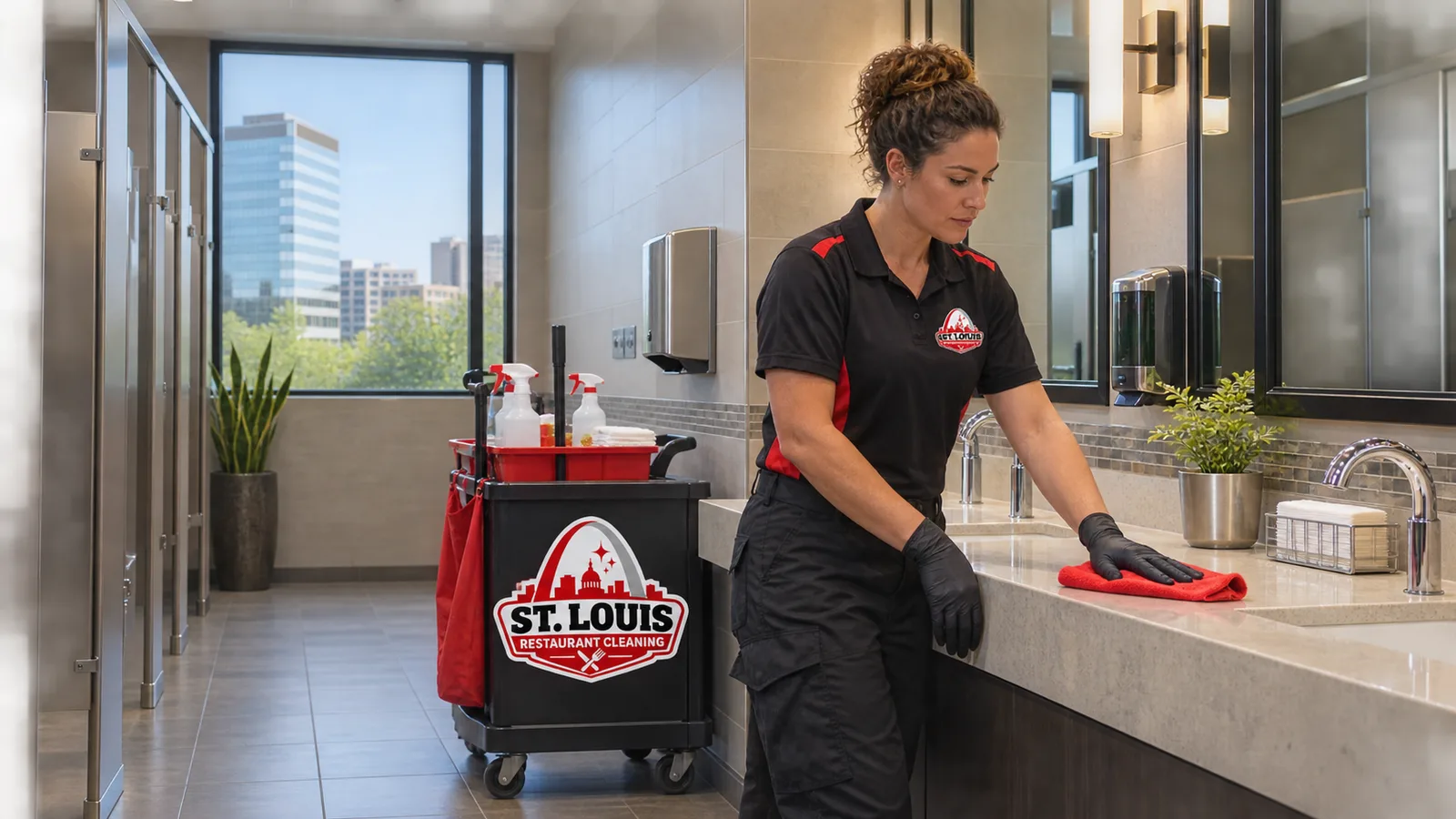
Restaurant Bathroom Cleaning Clayton should address the details guests notice and the sanitation risks they cannot see. St. Louis Restaurant Cleaning removes soil from toilets, urinals, sinks, partitions, mirrors, counters, dispensers, doors, and floors. High-touch points such as flush handles, faucet controls, door pulls, latches, and changing-station surfaces receive focused attention.
The work can be scheduled around opening, closing, prep, and delivery periods so restroom care does not interfere with staff or diners. For each scope, an experienced restaurant team in St. Louis considers the actual room, its surface materials, expected traffic, and the responsibilities already assigned to restaurant employees. That produces a clear division between routine staff checks and professional cleaning visits.
Clayton has restaurants serving office workers, hotel guests, residents, and evening diners. Restroom traffic may arrive in short, heavy periods around lunch, private events, or dinner service. A dependable plan accounts for those peaks, along with Missouri's wet winters and humid summers, when tracked-in moisture and grit can quickly affect tile floors and grout near restroom entrances.
Request a CallbackWhat a Professional Restroom Cleaning Visit Covers
A proper visit starts with removal of loose trash and visible debris. Toilets and urinals are cleaned inside and out, including rims, bases, flush controls, and nearby walls or partitions affected by splash. Sinks, faucets, counters, mirrors, dispensers, and accessible plumbing surfaces are cleaned with products suited to the material.
Touchpoints are cleaned and disinfected with attention to the product label's required contact time. A disinfectant needs to remain visibly wet for its labeled dwell time; immediately wiping it dry can prevent proper use. Color-coded cloths and tools can also help keep toilet-area equipment separate from sink and counter equipment.
Floors are treated according to their condition and material. The process may include dry soil removal, edge work, wet mopping, spot treatment, and grout-line attention. Cleaning restores appearance by removing soil, while disinfecting targets listed microorganisms on compatible hard, nonporous surfaces. These are separate steps, and heavy soil should be removed before disinfectant is applied.
Request a Callback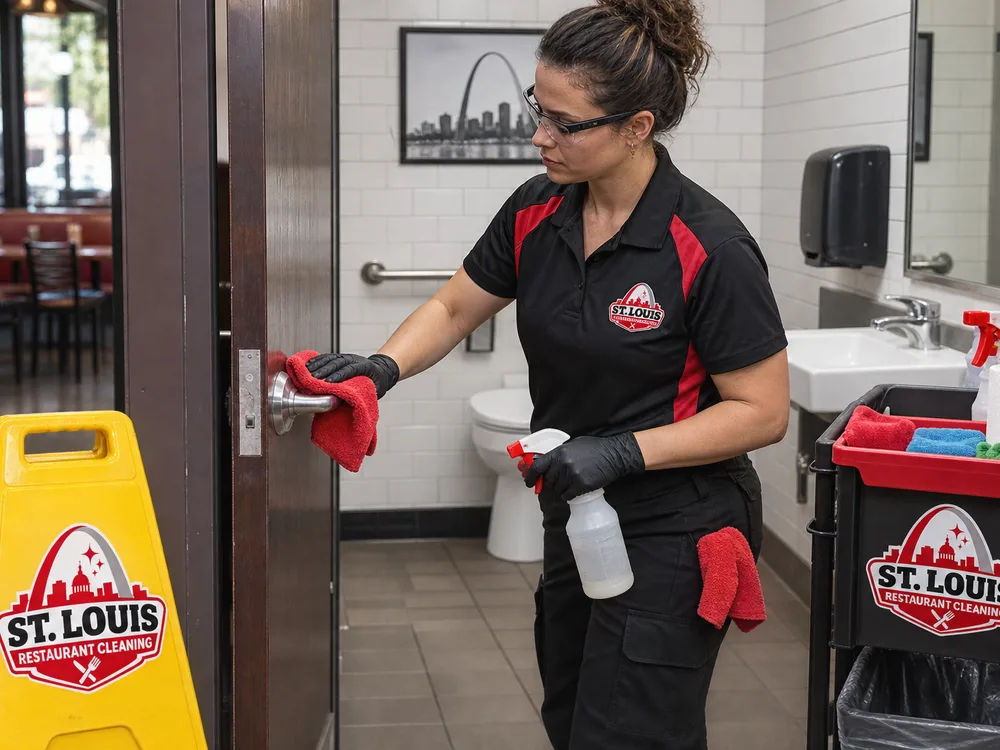
Fixtures and Surrounding Areas
Toilets and urinals are cleaned at bowls, seats, rims, hinges, bases, flush controls, and adjacent splash zones. Mineral deposits, buildup, and odor sources are addressed according to surface condition.
Sinks, Counters, and Mirrors
Faucets, basins, counters, backsplashes, mirrors, and accessible pipes are cleaned without using harsh products on finishes that require gentler chemistry.
High-Touch Surfaces
Door pulls, locks, partition latches, dispensers, switches, grab bars, and changing stations receive careful cleaning and appropriate disinfection.
Floors, Edges, and Grout
Dry debris, sticky residue, corners, base edges, and grout lines are treated as needed. The floor is left clean and allowed to dry before normal traffic resumes.
Waste and Consumable Checks
Waste receptacles are emptied, liners are replaced, and agreed consumables can be checked or replenished from the restaurant's supply.
Odor Source Control
The work targets residue around fixture bases, waste containers, grout, floor edges, and other common odor sources instead of relying on fragrance to cover them.
Walk Through the Restrooms
We review fixture counts, floor and wall materials, dispenser types, access, existing buildup, storage options, and the times when cleaning can occur without disrupting guests.
Define the Written Scope
The plan identifies tasks, visit frequency, special concerns, supply responsibilities, and any periodic detail work. It can distinguish cleaning, disinfection, restocking, and deep-cleaning tasks.
Complete the Scheduled Service
The crew follows the agreed task order, uses restroom-specific tools, places wet-floor signage when needed, and works within the scheduled access window.
Review and Adjust
Traffic can change with seasons, menu promotions, private events, or new operating hours. The scope can be reviewed when restroom use or maintenance needs change.
Cleaning Plans Matched to Clayton Dining Operations
A small dining room with one single-user restroom has different needs than a restaurant with several stalls, multiple sinks, and late-night traffic. Frequency depends on guest volume, hours, fixture count, floor type, staff responsibilities, and how quickly consumables are used. Some establishments need service after each operating day, while others pair scheduled professional visits with documented checks by their own staff.
Restaurants near Clayton's office concentration may experience pronounced weekday lunch traffic. Establishments around hotels, event venues, and major roads can have later or less predictable use. Those operating patterns matter because a restroom that looks acceptable before a rush may need attention immediately afterward.
The scope remains focused on guest and employee restrooms. If broader restaurant cleaning in Clayton is also needed, it should be assessed separately so dining, front-of-house, and other approved areas receive their own task lists, tools, and schedules.
Request a CallbackProducts, Safety, and Quality Control
Restaurant restroom surfaces vary. Glazed tile, grout, stainless steel, chrome, laminate, painted partitions, porcelain, vinyl, and stone may require different products. Acidic cleaners can damage some stone and metal finishes, while abrasive pads can scratch polished surfaces. Product selection should follow the manufacturer's label and the surface maker's care guidance.
Cross-contamination controls matter as much as visible results. Restroom cloths, mop heads, brushes, and buckets should remain separate from equipment used in dining or food-preparation areas. Disposable gloves, proper chemical dilution, ventilation, and Safety Data Sheet access support safer handling. Wet-floor signs and controlled access reduce slip exposure while floors are being cleaned and dried.
Quality checks should be concrete. A completed restroom should have clean fixtures, clear mirrors, dry counters, emptied receptacles, replenished agreed supplies, and no obvious residue at bases or edges. Recurring issues such as leaking fixtures, loose dispensers, failed exhaust fans, or damaged grout can be reported to restaurant management, though repair work is outside the cleaning scope.
Request a CallbackSet a restroom cleaning schedule that fits your service hours, fixture count, and busiest guest periods.
Call for a Free QuoteQuestions About Restaurant Bathroom Cleaning Clayton
How much does restaurant bathroom cleaning cost in Clayton?
Pricing depends on restroom size, fixture count, service frequency, access window, and current condition. Heavy buildup, detailed grout work, multiple stalls, late access, and consumable management can affect the quote. A walkthrough allows St. Louis Restaurant Cleaning to provide a written scope based on the actual Clayton property rather than a generic per-room figure.
How often should a Clayton restaurant restroom receive professional cleaning?
The right frequency is based on guest traffic and how quickly the room soils between staff checks. A high-volume lunch or dinner restaurant may need frequent professional service paired with checks during operating hours, while a lower-volume establishment may use a different schedule. Fixture count, floor material, operating hours, and private events should all be considered.
Can cleaning take place after the restaurant closes?
Yes, restroom cleaning can be planned for an approved closing, pre-opening, or other low-traffic window. The schedule should allow enough time for disinfectant contact periods and for floors to dry before employees or guests return. Access arrangements and alarm procedures are confirmed before recurring work begins.
Does the service include soap, paper products, and liners?
Restocking can be included when supply responsibilities are defined in the scope. The restaurant may provide its preferred soap, tissue, towels, and liners, with the cleaning crew checking and replenishing them during each visit. Dispenser type and storage location should be documented during the initial walkthrough.
Can you remove restroom odors instead of masking them?
Cleaning can address many odor sources by removing residue from fixture bases, grout, waste containers, floor edges, and splash areas. Persistent odor may also indicate a dry drain trap, plumbing leak, damaged seal, or ventilation issue that requires building maintenance or a licensed trade rather than additional fragrance.
Are cleaning and disinfecting the same task?
No, cleaning removes soil and organic matter, while disinfecting uses a registered product on compatible surfaces according to its label. Dirty surfaces generally need to be cleaned first, and the disinfectant must remain wet for its stated contact time. This distinction is especially relevant to flush controls, latches, faucets, and door pulls.
Can you handle a deep clean before an opening or inspection?
A one-time detail cleaning may be scheduled for a new opening, management change, special event, or corrective cleanup, subject to the room's condition and access. The walkthrough identifies buildup, damaged materials, repair needs, and tasks that fall outside normal recurring service. Cleaning supports sanitation, but it does not guarantee an inspection outcome.
What should we prepare before the first service?
Provide the approved access window, restroom locations, alarm or key procedures, supply storage information, and any surface-care restrictions. Personal items and unsecured stock should be removed from work areas. Management should also identify known leaks, damaged fixtures, sensitive finishes, or areas that require special handling.
Build a Better Restroom Cleaning Plan
Tell St. Louis Restaurant Cleaning about your Clayton establishment, restroom layout, operating hours, and current concerns. We will help define a practical scope for cleaner fixtures, safer floors, controlled odors, and a more consistent guest experience.