Restaurant Equipment Cleaning in Affton
Remove baked-on grease, carbon deposits, and food residue with a cleaning plan built around your equipment, operating hours, and kitchen workflow.
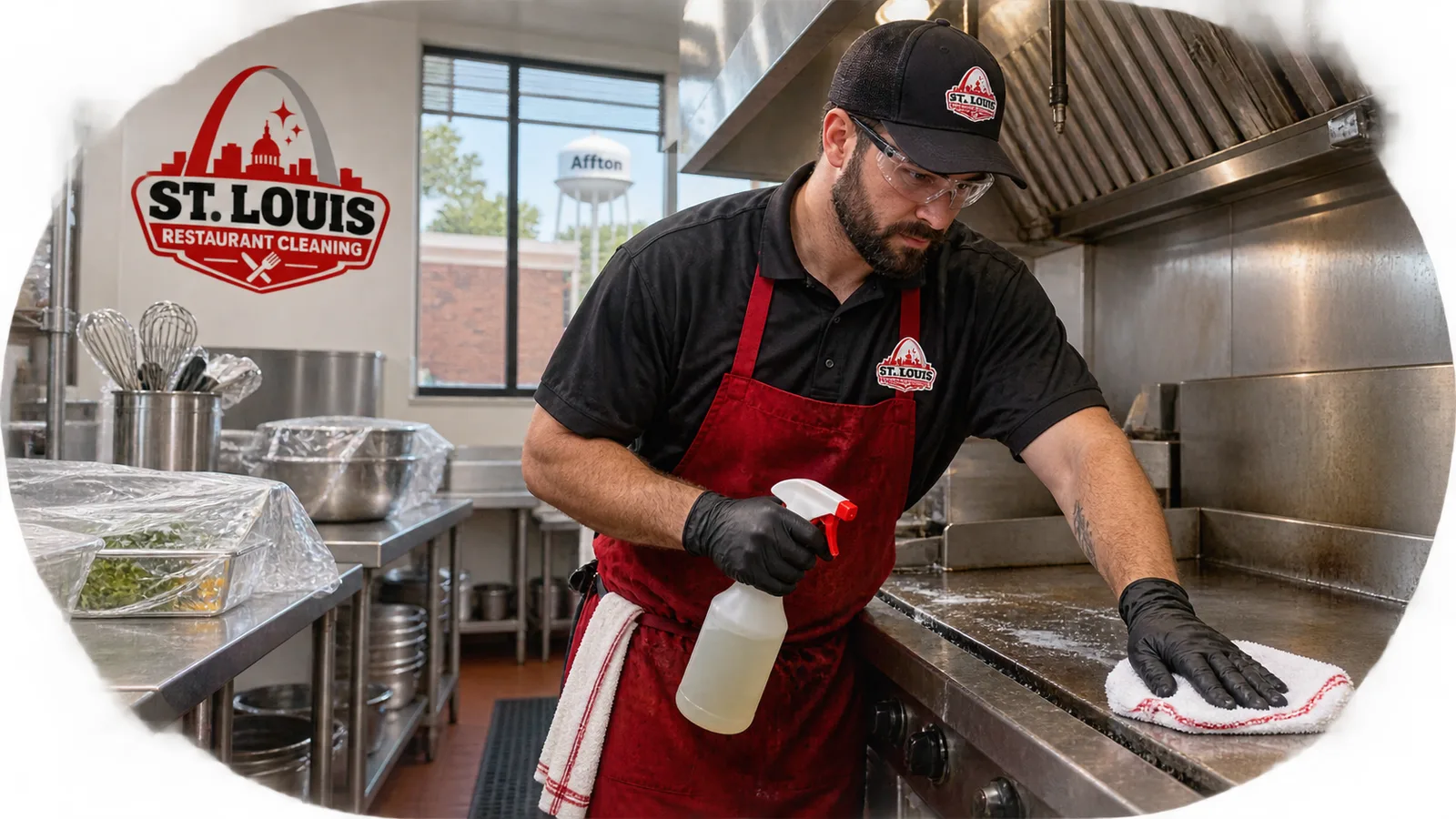
Practical Restaurant Equipment Cleaning Affton Kitchens Can Schedule Around Service
Restaurant Equipment Cleaning Affton helps commercial kitchens address the grease, carbon, and food residue that ordinary closing routines may leave behind. St. Louis Restaurant Cleaning handles detailed equipment cleaning for restaurants, bars, cafés, bakeries, caterers, and other food service operations. The scope can cover selected high-use appliances or a coordinated deep clean of multiple equipment stations.
We are St. Louis' local restaurant service, planning the work around the equipment’s condition and the hours when your kitchen can release it. That matters in Affton, where independent restaurants and neighborhood food businesses may have tight prep areas and limited room to move appliances. Before work begins, we identify the equipment included, discuss access and shutdown needs, and confirm which surfaces can be safely treated.
Equipment cleaning supports a cleaner workspace, but it does not replace required maintenance, repairs, fire suppression service, pest control, or exhaust-system inspection. If a technician finds a damaged seal, frayed cord, loose fitting, or mechanical fault, the unit should be evaluated by a qualified equipment professional.
Request a CallbackWhat Commercial Kitchen Equipment Can Be Cleaned?
A restaurant equipment cleaning visit can address ranges, ovens, griddles, fryers, charbroilers, steam tables, prep tables, shelving, stainless steel exteriors, and accessible surfaces around refrigeration equipment. The final scope depends on the appliance, manufacturer instructions, surface material, buildup, and whether components can be safely removed.
Cooking lines usually need the most intensive degreasing. Grates, racks, drip trays, grease drawers, and removable guards may be taken out and cleaned separately. On stainless steel, the method should follow the grain and avoid abrasive damage. Aluminum, coated surfaces, control labels, electrical components, heating elements, and stone cooking decks require different treatment. One chemical or tool is not suitable for every surface.
Refrigerators and freezers may require advance unloading or shutdown coordination. Cleaning focuses on approved interior and exterior surfaces, door gaskets, shelves, and accessible areas beneath or behind the unit when movement is safe. Refrigerant systems, electrical repairs, and mechanical service remain outside a cleaning scope.
Request a Callback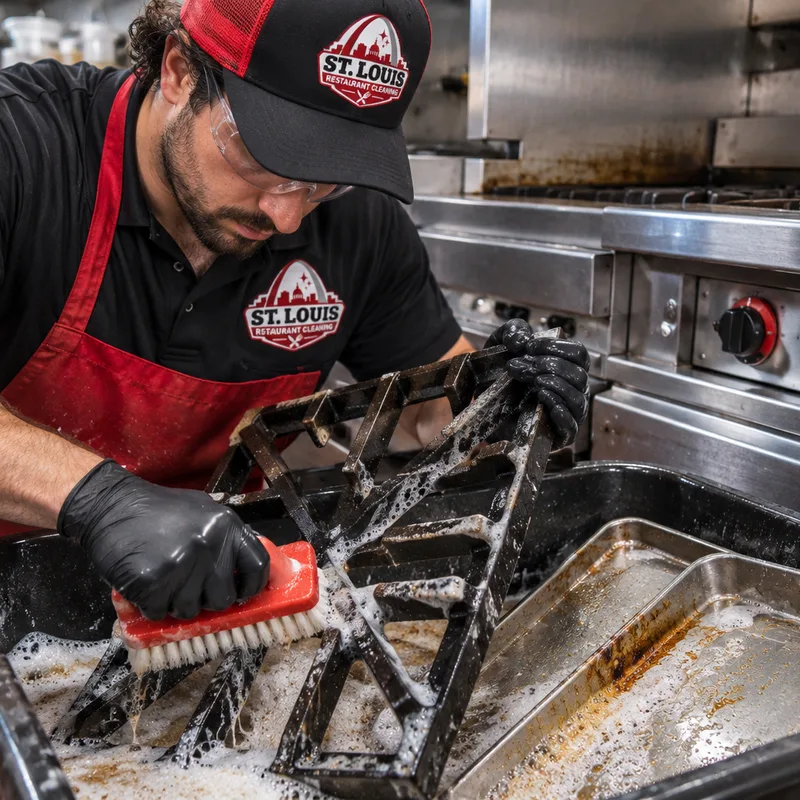
Ranges and Ovens
Accessible cooking surfaces, racks, grates, drip areas, doors, handles, and exteriors are treated for grease and carbon buildup without flooding controls or burner components.
Fryers and Griddles
Exterior panels, removable trays, grease channels, baskets, and approved cooktop surfaces can be cleaned after the equipment is cool, drained, and prepared as agreed.
Charbroilers and Hot Lines
Removable grates and guards receive focused attention, while adjacent stainless steel and accessible splash areas are degreased to reduce sticky residue.
Prep and Holding Equipment
Prep tables, steam tables, warming equipment, shelving, and carts are cleaned according to their materials and the manufacturer's care requirements.
Refrigeration Surfaces
Approved interiors, shelves, gaskets, handles, exterior panels, and accessible floor areas can be addressed when food storage and temperature control are planned in advance.
Hard-to-Reach Areas
When access is safe, cleaning may include exposed sides, casters, legs, wall gaps, and flooring beneath movable equipment where grease and debris collect.
Confirm the Equipment and Access
We identify each unit, its condition, the surfaces involved, and any restrictions on movement or disassembly. The written scope also records shutdown, cooling, unloading, and access responsibilities.
Protect the Work Area
Food, utensils, packaging, and clean wares must be removed or protected. Floors and adjacent surfaces are prepared as needed, and equipment is disconnected only when the agreed procedure and qualified personnel allow it.
Remove Loose Deposits
Crumbs, loose carbon, and debris are collected before wet work. Removable racks, grates, trays, and guards may be separated so contact surfaces and edges can be reached.
Apply the Correct Cleaning Method
Degreasers, agitation, scraping tools, and dwell time are matched to the soil and material. Sensitive controls, labels, electrical openings, coated parts, and other vulnerable components are protected.
Rinse, Dry, and Review
Where rinsing is appropriate, residue is removed and surfaces are dried. Components are returned to their agreed positions, visible work is reviewed, and any damage or maintenance concern noticed during cleaning is reported.
Restaurant Cleaning in Affton Requires Careful Scheduling
A useful cleaning plan starts with the restaurant's service pattern. An Affton kitchen serving lunch and dinner may need overnight work, while a bakery may have a narrow opening between production cycles. Equipment must be cool enough to treat safely, and fryers or refrigeration units may need specific preparation before the crew arrives. St. Louis summers can also increase the importance of limiting refrigeration downtime during unloading and cleaning.
The scope should state whether restaurant staff or the cleaning crew will move racks, empty cold storage, drain fryer oil, or handle removable components. Heavy appliances should not be moved unless the floor, utility connections, casters, and clearances allow it. Gas, electrical, and water connections require proper handling by authorized personnel when disconnection is necessary.
A periodic deep-clean schedule can be based on cooking volume, menu, equipment type, and how quickly residue returns. A charbroiler producing airborne grease will have different needs than a cold-prep station. Daily staff cleaning remains necessary between professional visits, especially on food-contact surfaces.
Request a CallbackFood-Safe Practices and Clear Limits
Cleaning products should be selected and used according to their labels and the equipment manufacturer's instructions. Food-contact surfaces require the appropriate wash, rinse, and sanitizing steps before food preparation resumes. Cleaning and sanitizing are separate actions: cleaning removes soil, while an approved sanitizer is applied under its labeled concentration and contact-time directions.
Professional equipment cleaning also requires control of chemical overspray and wastewater. Degreaser should not enter food, utensils, electrical controls, pilot assemblies, or unprotected ingredients. Safety data sheets and product labels guide dilution, personal protective equipment, ventilation, and disposal practices.
This work addresses accessible restaurant equipment and surrounding buildup included in the written scope. It does not certify code compliance or replace inspections conducted by the St. Louis County Department of Public Health or another authority with jurisdiction. Commercial hood ducts, rooftop exhaust fans, fire suppression components, internal machinery, and repairs should be assigned to contractors qualified for those specific systems.
Request a CallbackHow Much Does Restaurant Equipment Cleaning Cost in Affton?
Restaurant equipment cleaning in Affton typically costs about $300 to $800 for a focused visit, while extensive cooking lines or heavily soiled multi-unit projects may run $800 to $2,000 or more. These are general, nonbinding ranges rather than a quoted price.
Final cost depends on equipment count, grease and carbon buildup, removable components, access, appliance movement, shutdown requirements, and whether cold storage must be unloaded. Recurring work may differ from a first deep clean because the condition is more predictable. The exact cost is confirmed after the equipment and requested scope are reviewed.
Request a CallbackGet a written equipment list, preparation requirements, and cleaning plan that fits your kitchen's operating schedule.
Call for a Free QuoteQuestions About Restaurant Equipment Cleaning in Affton
Can equipment cleaning be scheduled after the restaurant closes?
Yes, after-hours work can often be planned when the kitchen has a suitable shutdown window. The timing depends on how long ranges, ovens, fryers, and griddles need to cool, as well as when staff must begin prep again. Affton restaurants with lunch and dinner service should identify the last cooking time and required reopening time before scheduling.
How long does a commercial equipment cleaning visit take?
A focused visit may take several hours, while a heavily soiled line with multiple appliances can require a longer shift or staged work. Equipment count, carbon buildup, removable parts, access, and cooling time affect duration. The schedule should include setup, cleaning, drying, reassembly, and a final review rather than counting active scrubbing time alone.
Does the restaurant need to prepare equipment before cleaning?
Yes, the restaurant usually needs to stop cooking, remove food and utensils, and let hot equipment cool before the agreed start time. Fryer oil, cold-storage contents, and detachable components require specific coordination. Preparation duties are confirmed in advance so an Affton kitchen does not lose service time because a unit is still hot or loaded.
Can you clean behind and beneath commercial appliances?
Accessible areas behind and beneath equipment can be cleaned when movement is safe and included in the scope. Units connected to gas, water, electricity, refrigeration lines, or rigid ventilation should not be pulled out casually. Appliance weight, casters, floor condition, clearances, and utility connections are checked before movement.
Will professional cleaning remove every carbon stain?
No, permanent discoloration, corrosion, pitting, damaged coatings, and deeply bonded carbon may remain after safe cleaning. Aggressive abrasion can harm stainless steel, aluminum, enamel, and coated surfaces. The goal is to remove serviceable buildup without trading a cosmetic improvement for equipment damage.
How often should restaurant equipment receive a deep clean?
The right interval depends on the menu, cooking volume, appliance type, daily cleaning quality, and how quickly grease or carbon returns. Fryers, charbroilers, and griddles may need focused attention more often than low-use holding equipment. A practical schedule is set after reviewing actual buildup, then adjusted as operating conditions change.
Does equipment cleaning include hood ducts or mechanical repairs?
No, equipment cleaning does not automatically include hood ducts, rooftop exhaust fans, fire suppression systems, or mechanical repairs. Those systems require separate scopes and, in some cases, specialized contractors. Visible defects such as damaged wiring, broken gaskets, or loose connections should be referred to a qualified equipment technician.
Plan a Cleaner Equipment Line Around Your Operating Hours
Tell St. Louis Restaurant Cleaning which appliances need attention, when your kitchen can release them, and where buildup is most difficult. We will help define the scope, preparation, and timing before work begins.